
Now that I’ve left England, there are some images I want to share. These images reflect the adaptability of the people in the places I visited and the beauty in everyday things.
Umbrellas and wellies are pretty much standard fashion items in the UK. Most times they are made of utilitarian materials in basic shades of black and army green. I noticed that when the rain hit, people’s wardrobes also became black and gray, as if the clouds and fog enveloped their very beings. Wouldn’t it make sense to wear cheerful clothes when the lines of the environment are smudged into a charcoal tableau of noir? After experiencing a true deluge of a day, when the umbrella cannot be big enough to protect anything but the top of your head and your shoes and pant legs are so waterlogged that they can’t absorb any more moisture, I realized black is the only choice. When that car drives through the puddle and throws more grimy water at you, you want a color that will hide the mud stains. A nice cheery red or yellow is rubbish. Those colors are lightweights in the match of man versus rain. Black is the champion.
Umbrella colors change a bit when Spring pops around. I noticed this in Bath. The owner of the French restaurant had just brought us complementary brandies when the rain started. American jazz played in the background as I watched the umbrellas pop up and people hurrying along the street. I suppose the brandy, the French dinner, and the jazz made me think of Gene Kelly. The image of him singing in the rain came and went. But it was American in Paris that I connected to the umbrellas passing by the window. The people underneath the umbrellas were hidden from me, so I thought of the music and the rush of umbrellas moving past the window, with an occasional red or flowered one breaking up the monotony of the procession. It seemed like those umbrellas moved like a scene in a movie that has been sped up to match the background music. The bright-colored umbrellas represented the change in the rain and everyone’s attitude towards it. This is one of those memories I will hold onto forever.
Bicycles are a transportation staple in England, especially in Oxford and Cambridge. There are bikes and trikes and cycles with two wheels in the front and one back. There are mountain bikes for the dirt trails around the river and canal. There are cruising bikes for getting around campus. There are commuting bikes that are sometimes left behind on weekends when the owners take out their road bikes for serious cycling. People in England are not fair-weather cyclists. They put on a slicker or rain coat and put on a hat and ride to work – every day. Women sometimes wear a helmet, but often just tie up their hair and consider that the style for the day. They ride in the ice and snow.
Mothers meet their children after school with a bike instead of a car. When school lets out, it is usual to see toddlers and young school children in contraptions attached to a bike. Many mothers and fathers have standard bike carriers attached to their bikes. Some have posh front carriers where a child is seen reading inside as his parent bikes them home. Many children have little scooters they ride alongside their biking parents. I’ve even seen old wooden-sided wagons used on the front of the bike to carry anything from dogs and children to gardening soil.
The on-the-edge teenagers lean their bikes up against fences and smoke and chat. Riding a bike is not unusual for cool guys. They take the bus or ride their bikes to the clubs. If a group wants to go outside of the parental radar, they can take a train to about anywhere and still be home by curfew. I’m sure there are plenty of younger drivers, but the price of petrol is pretty steep, so biking makes more financial sense.
There are people in Oxford who sold their cars, because they never took them out of the driveway for months at a time. There is something oddly intriguing about men who commute on bikes in their suits and ties, who stop at Tesco or Sainsbury’s to pick up dinner on their way home from work, and who sit up straight as they wind in and out of traffic. Or women decked out in heels and skirts heading to their business meeting or blind date. Or students with their black robes parachuting behind them as they race to class. There are cities in the U.S. where bikers are common and encouraged, but I’ve never lived in a place where bikes are so much a part of the everyday culture and not limited to weekend recreation.
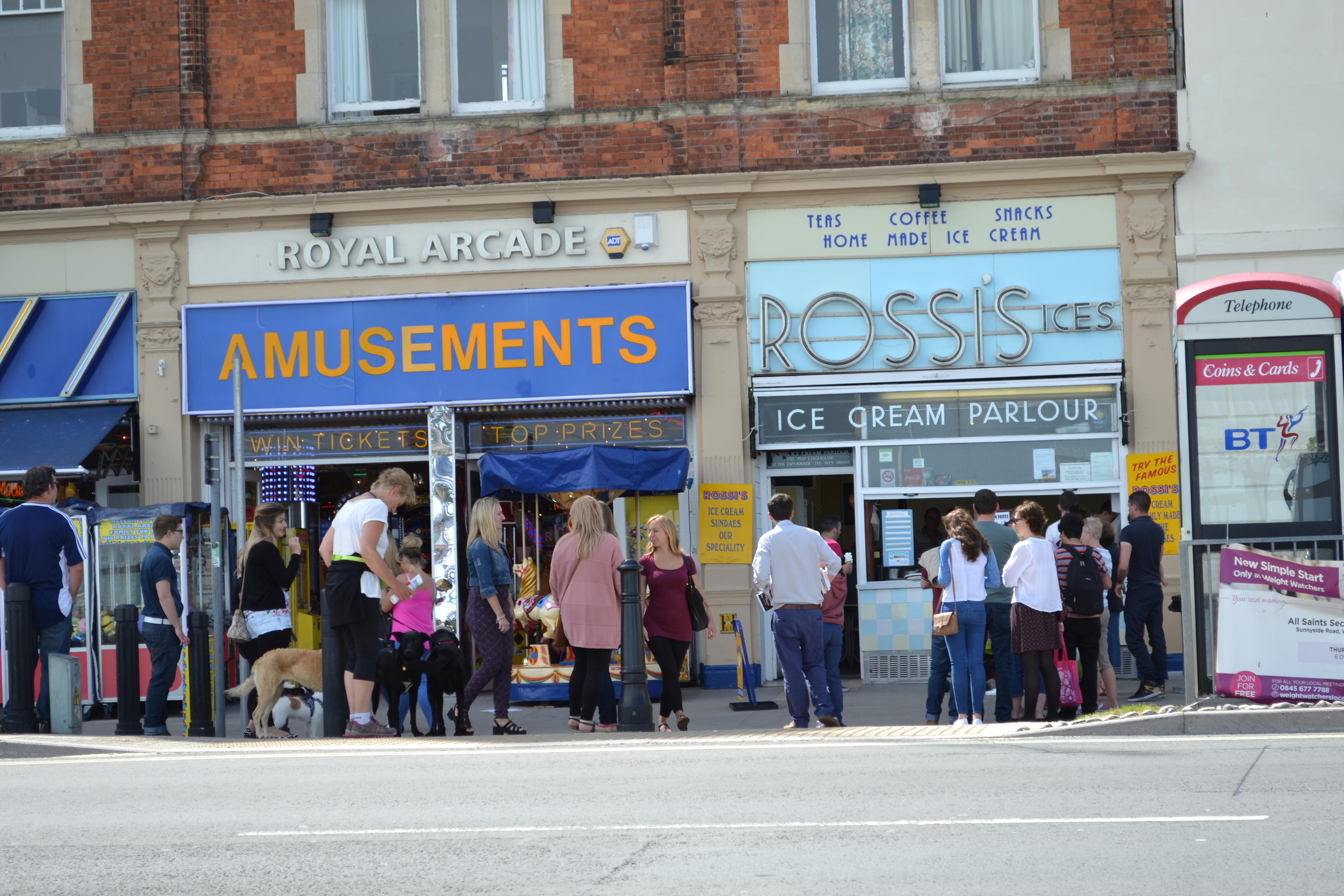
There are six weeks out of every year devoted to summer dresses. It doesn’t matter if she’s pudgy or slim, if her skin is pale or bronzed, or if her legs are toned or flabby, every woman in the United Kingdom wears a summer dress or skirt in July. I might be exaggerating – just, but it seems true. And they all look wonderful. They refuse to give up their bare shoulders or exposed legs — even in the most inclement conditions. If the calendar says July, one wears a light, perky dress. Even I, the ultimate cover-up queen, splurged at Primmark and paid a fiver for a summer dress. When I wear it, I get it. The only way to describe it is to imagine oneself twirling. Women aren’t worried about how they look in a summer dress like they worry when they put on a swimsuit. There is a dress out there for any body type. Even a long skirt, that flows with a woman’s shape and brushes against her ankle as she walks, makes her feel feminine. She’s put aside the business suit, the sweater set and tights, and put on a girlie outfit. Like Maria, she feels “pretty and witty and gay”.
The sad news is that the United Kingdom’s natural kingdom appears to be rushing autumn. There are signs of autumn as July begins, so by the time I get back to the UK, the carefree days of summer might be over. It will be back to black umbrellas, green wellies, and hats and tied-up hair. Summer dresses will be replaced by dark trousers and wool skirts. Summer dresses will be but a memory of something once bright and beautiful.













 Kathy Travels Europe