Like those seagulls in Dover, uneasiness follows me and deftly closes in on my conscience. It’s time to apologize to the White Cliffs. Now that there is recent footage of a ghost in Dover Castle (search for Dover Castle ghost 2014), I am compelled to share my own experience at the castle, as well as to talk about the many good things about Dover.
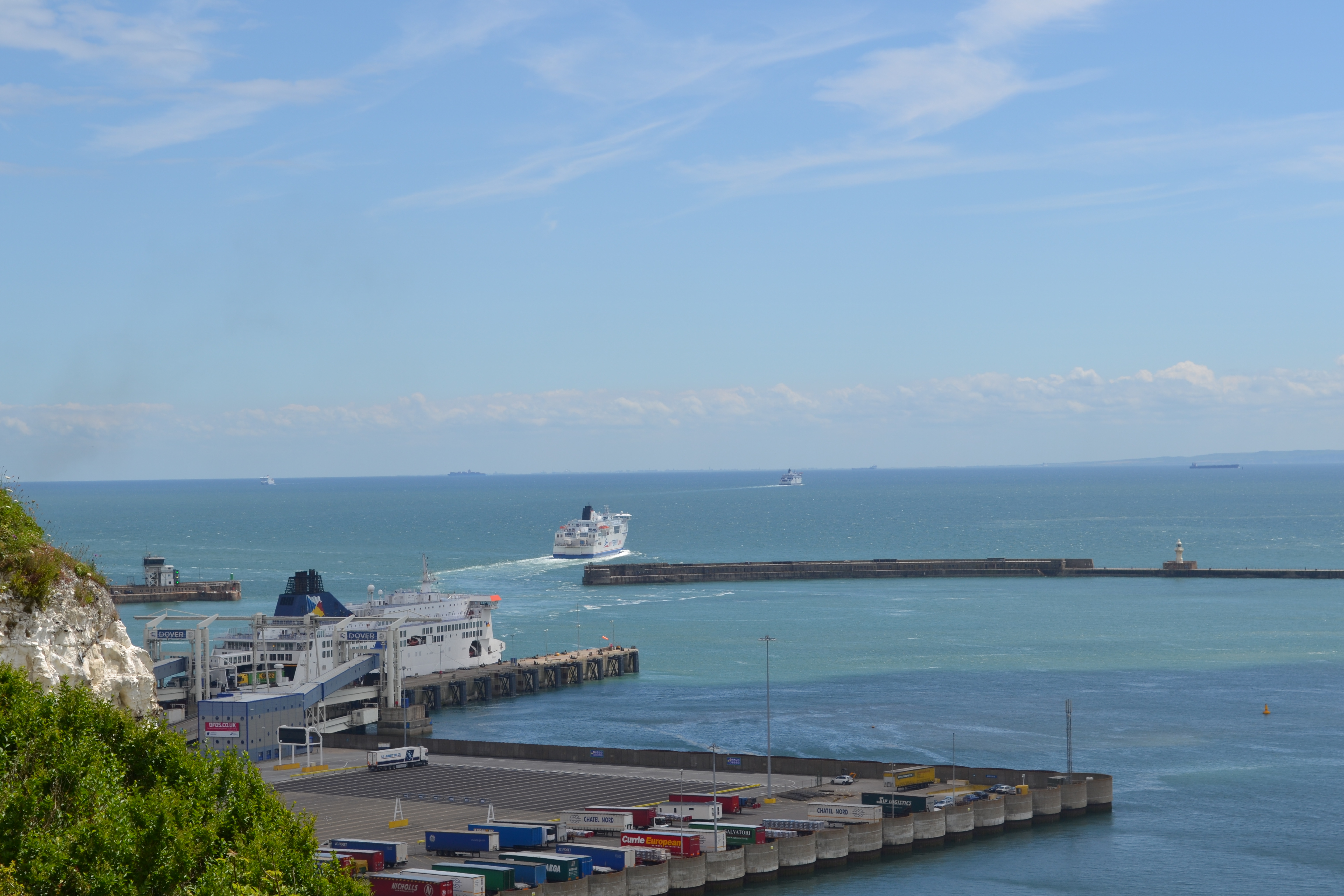 It’s true that Dover and I didn’t quite click. There’s the absence of enticing restaurants or eateries for a pedestrian visitor. At best, the city center lacks the vibrancy of any other seaside village in June and at worst, it produced uncomfortable vibes for a solo woman traveler. Vagrancy and a tolerance for visible drug use and drunkenness was off-putting. I’m no prude and can ignore quite a bit when a place is filled with young holiday-makers, but my first impression of Dover included a calculation of how many days I had before I could leave.
 There are a few places in my travels that haven’t been instant hits – places where I want to flee or hole up in my room until I can grab my suitcase and run to the train station. These are the places where I question my decision to stay for a longer time to “get to know” a place. I wonder what possessed me to book for so many days, yet these are the destinations that often bring me the most satisfaction, if only for the simple reason of sticking it out. Some places might be contenders for Tim Moore’s book, You Are Awful (But I Like You) Travels Through Unloved Britain. Others just felt wrong to me for various, inexplicable reasons. Sticking it out, I’ve found, is often excruciating, but also makes me find the glitter in the debris. And there are gems hidden in places like Dover. I was sorry to leave Dover at the end of my “sticking it out” sentence.
There are three places in every stop that offer a tourist a glimpse of a new place – the Tourist Information Bureau, the local museum, and the public library. Dover’s tourist bureau and local museum reside together and the interior of the building is airy and seems spacious, even with all the usual tourist pamphlets. This is a recent move for the museum after some years of neglect and after most of the museum and contents were destroyed in the World War II bombing raids. The museum curators have worked to build the small, but impressive collection of artifacts.  An unexpected treat was the exhibition dedicated to the successful English Channel swimmers displayed along the stairwells.
 Like most of the country, Dover museum paid homage to the sacrifices and triumphs of World War I.
I did not visit the library in Dover and I am regretting it, because many libraries’ local history sections boast of local pride, from ghosts and murders to famous residents and, I suspect in Dover, a dominant theme of Carry On.
Dover’s main feature, besides the port, is its castle, built in the twelfth century and touted as the oldest castle in England. Unlike many castle attractions in the UK, Dover castle remains raw without much need for embellishment. There is a smallish interactive introduction to the castle and its inhabitants and an outline of its history. This is geared to educational visits, rather than catering to the tourist. Much of the castle is untouched by modern entertainment. There are two notable exceptions – the Great Tower and the tours of the tunnels. I chose to avoid the costumed guides or the hoopla of Henry II. I did visit the Secret War Tunnels where visitors can follow the planning and execution of Operation Dynamo, the Dunkirk rescue mission in WWII, when allied soldiers were saved by a multitude of British boats and ships. The tunnels are claustrophobic, as well as confusing, making it nearly impossible to allow visitors to wander alone underground. What I liked about the tour was the way the tour guide moved us along from room to room and tunnel to tunnel with stops to watch video footage projected on the walls. We gained a sense of the activity in the tunnels during WWII as we wandered past the names of soldiers and sailors scraped into the tunnel walls. There were informational placards at the displays, without the amusement park atmosphere found in so many castles and estates.
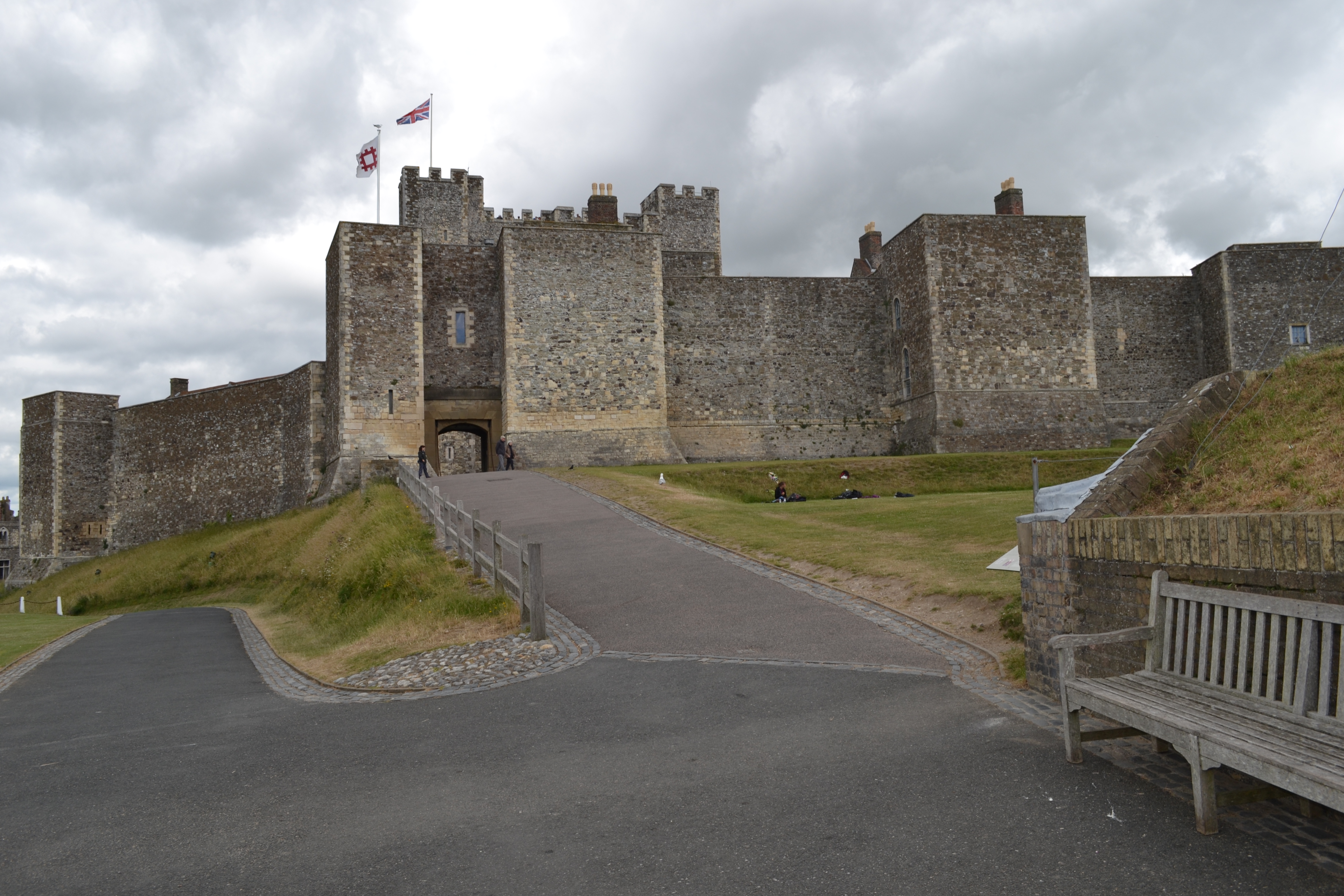
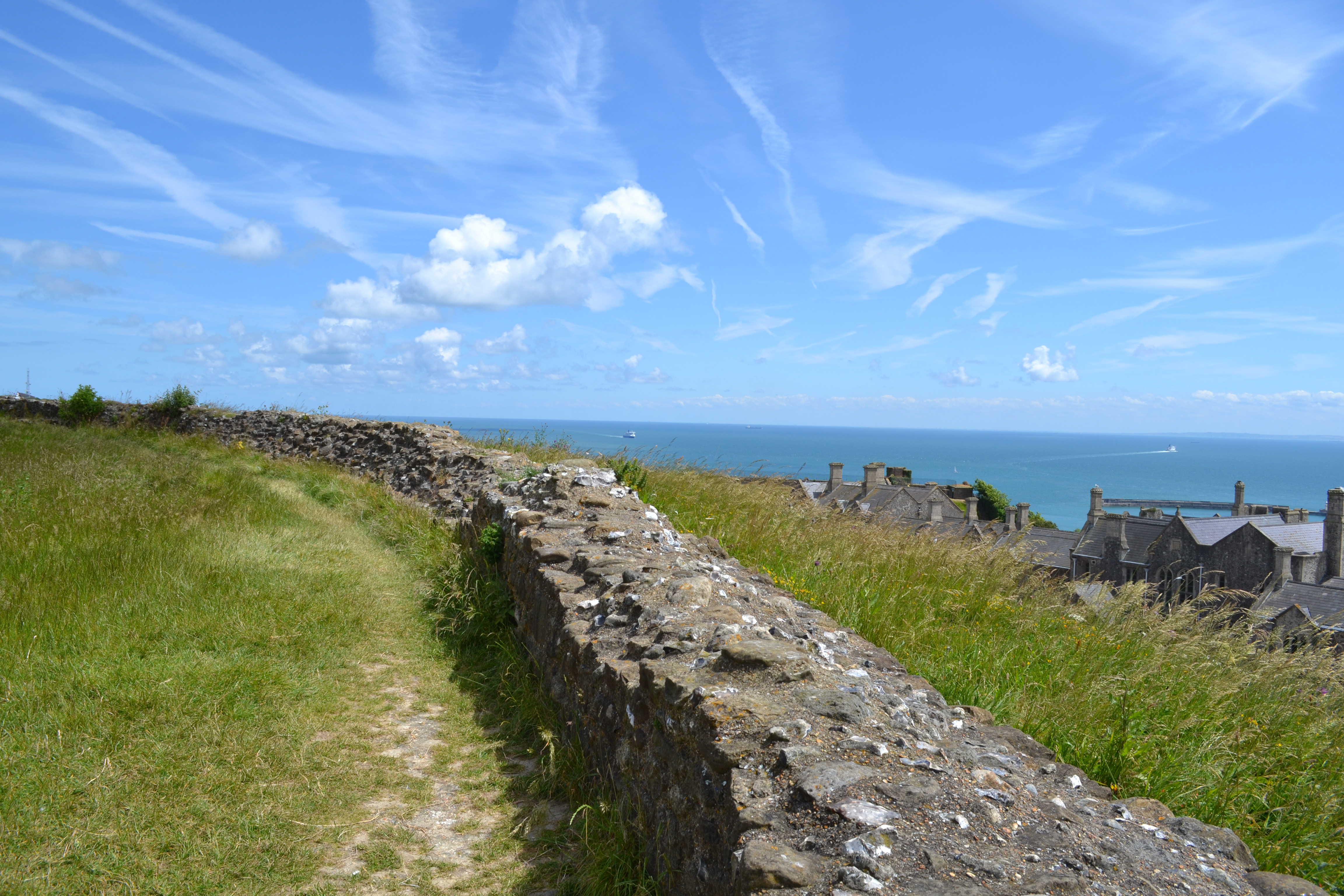
After the tour I wandered around the castle grounds (75 acres total), stopping at the Admiralty Lookout, where France is visible on a clear day and then walking up to the keep and on to the Chapel of St. Mary-in-Castro, a Saxon church still in use as a military chapel. Next to the chapel sits the Roman Pharos, a lighthouse built in AD 46. It was here I had my own “ghostly” encounter. Full disclosure here: I don’t think I actually believe in ghosts, but at the same time, I want to be proved wrong. Dover Castle also has the distinction of being named the most haunted place in England. This honor, however, seems to be bestowed on several places in England, depending on their tourist numbers.
 Some of the more known ghosts consist of a man in a long cape and broad hat with flowing hair or a man’s legs without a torso or a man without his legs. Recently, a long-established drummer boy found his way to the other side with the help of a paranormal expert and his drum is now silent. There are many accounts of an officer being sighted in the tunnels, but there is a possibility that he is a hologram projected as part of the tour experience. There is only one encounter at the lighthouse that I can find and the person asks if anyone else has experienced anything there – no details. So here’s my story.
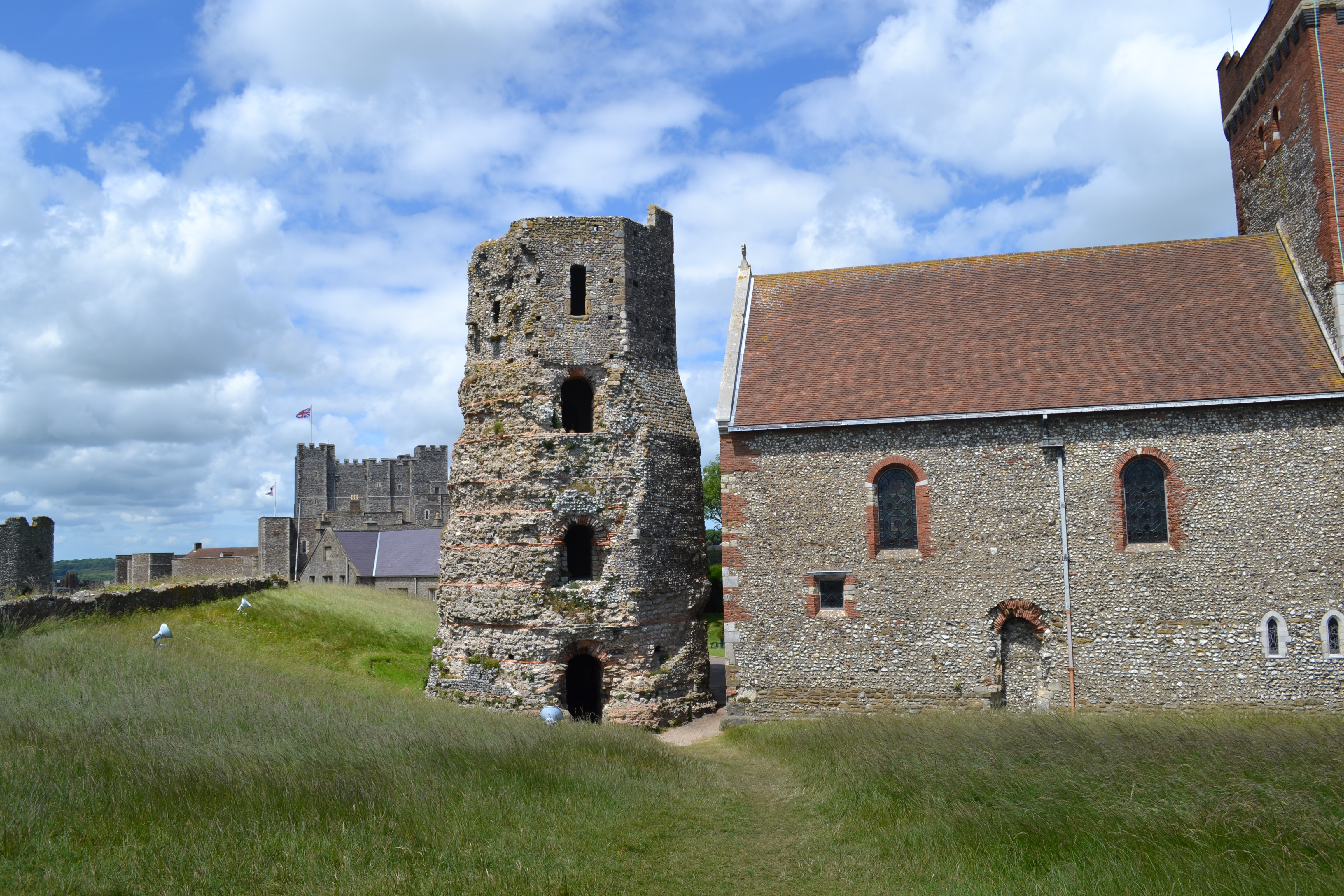
I visited Dover Castle at the end of June. It was a weekday, but the place was eerily empty of visitors. I ran into a few at the top of the tower and in the gift shops and waiting for the tunnel tours. When I visited the church and lighthouse, I was the only person there for at least half an hour. My habit is to find a church far from the notice of the guidebooks or only mentioned in the guidebooks as a historical sideline. A chapel in a castle is usually quiet and empty. That was the case with the Chapel of St. Mary-in-Castro. I sat inside for fifteen minutes, using the silence as a chance to meditate, contemplate, and to snoop around in the military chapel. The kneelers and the seat cushions were decorated with military insignias or memorials to fallen soldiers. I have no knowledge of medieval architecture, so I couldn’t tell what additions were made since its Saxon beginnings. It was a small chapel with a heavy, wood and metal door, and it was quiet. My thoughts focused on more personal and modern problems. I felt no ghostly fingertips (imagined or real). The temperature of the chapel did not turn icy. In fact, I reveled in the peaceful, relaxed mood I felt after my rest in the chapel. The door seemed heavier than before to open, but that was the only anomaly I noticed. I walked out of the chapel toward the lighthouse. That’s when I heard the laughter.
It was not the frenzied laughter of school children. It wasn’t the sinister playacting of a prankster. This laughter permeated terror. The overused cliché of unearthly is the only way I can describe it. Her laugh echoed from the pharos. I heard a woman laughing in fear and madness. By that time, I was familiar with the wild screeching of sea gulls and other sea birds. This was nothing like that. I looked around the tower for many minutes. I looked over the walls by the church. I looked down the slopes in each direction. I waited. Nobody else appeared.
Did I encounter a ghost? I rather doubt it, because there must be a reasonable explanation. The reason I can’t dismiss it with complete certainty is that I was not expecting or even desiring to find a ghost. I was at peace with myself and my surroundings. My mind was on the present. I do know that I never want to hear that horrible laughter ever again.
 Kathy Travels Europe